



How to Choose a Hair Styling Appliance Manufacturer for Your Brand
By hqt
Aug 24, 2026


Choosing a hair styling appliance manufacturer involves much more than comparing product prices. For beauty brands, distributors, retailers, and e-commerce sellers, the right manufacturing partner can influence product quality, customization flexibility, development speed, packaging consistency, and future supply.
A supplier may offer an attractive sample, but long-term cooperation depends on whether the factory can reproduce the approved specifications consistently when an order moves into volume production.
Before selecting a manufacturer, buyers should evaluate the complete process from product selection and engineering through sampling, quality control, production, and repeat orders.
Start With the Manufacturer’s Product Experience
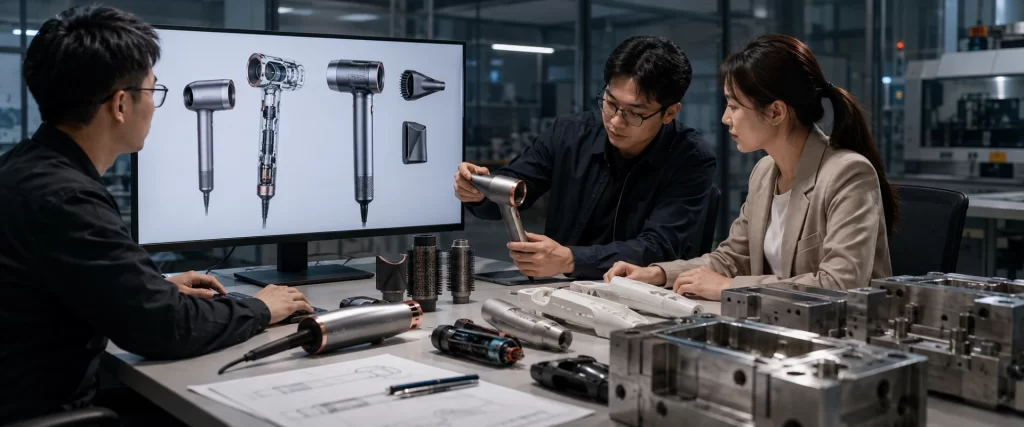
A manufacturer with experience across multiple hair styling categories can make product planning easier, especially when a brand intends to expand its collection later.
For example, a supplier working with hair dryers, straighteners, curling tools, heated combs, and hot air stylers can help buyers evaluate different product directions without having to coordinate with several unrelated factories.
KangRoad currently manufactures multiple hair styling appliance categories and provides integrated manufacturing support covering development, production, testing, quality control, and delivery.
Buyers planning a dryer collection can review the Hair Dryers Series, while brands developing heated styling tools can compare straighteners, curlers, and other categories before deciding which products best match their market.
Decide Whether You Need OEM or ODM
The manufacturing route should match the maturity of the project.
OEM is often suitable when a buyer wants to begin with an existing product platform and customize elements such as branding, colors, packaging, voltage, plug type, cord configuration, or selected accessories.
ODM becomes more relevant when the product requires stronger structural differentiation, new tooling, unique appearance, special functions, or other engineering changes.
KangRoad’s current manufacturing structure supports both existing-model customization and new-product development, including structural design, tooling, sample evaluation, and engineering refinement.
Choosing the correct route early helps prevent unnecessary tooling costs while also avoiding the opposite problem: trying to force a highly differentiated product concept into a platform that cannot support it.
Look Beyond Logo Customization
Private labeling should not be treated as simply printing a logo on an appliance.
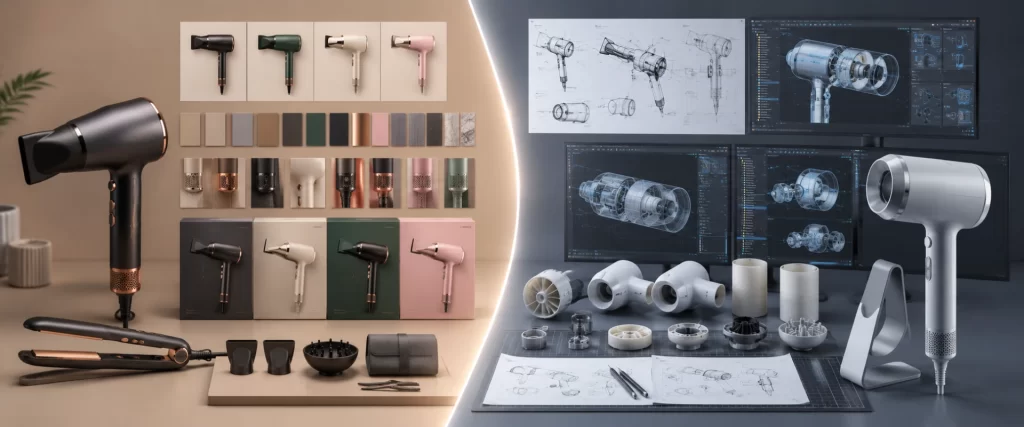
For many brands, the final product needs to coordinate appearance, colors, finishes, logo placement, product configuration, accessories, manuals, labels, and packaging.
These elements influence how customers perceive the product when they first see the retail box, open the package, and use the appliance.
KangRoad’s Private Label Beauty Brands solution includes coordinated product appearance, branding, electrical configuration, accessories, and packaging rather than treating them as separate decisions.
A useful manufacturer should therefore be able to discuss the complete product presentation, not only the appliance body.
Review Engineering and Sampling Capabilities
A reliable sample process is one of the most important parts of sourcing hair styling appliances.
The sample should help confirm appearance, handling, heating or airflow performance, functions, accessories, branding, packaging, and relevant electrical configurations before mass production begins.
For more customized projects, engineering involvement becomes even more important. Structural feasibility, material choices, electronic functions, tooling, heating systems, airflow design, and manufacturability may all need to be reviewed before the product is ready for production.
KangRoad’s manufacturing page describes an R&D process covering structural and appearance design, materials, heating performance, airflow, electronic functions, prototyping, tooling, sample validation, and preparation for production.
Understand How Quality Is Controlled During Production
Quality control should happen throughout manufacturing rather than only when finished cartons are ready to ship.
Incoming materials, molded components, assembly, appearance, electrical functions, heating or airflow performance, accessories, and packaging may all affect the final product.
A good manufacturing system should establish approved specifications before production and use them as the reference for inspection.
KangRoad states that its quality process covers incoming materials, component preparation, assembly, functional testing, final inspection, and shipment.
Buyers who want to understand this process in more detail can review the Hair Styling Appliance Manufacturing page.
Consider Repeat Orders Before the First Order
The first purchase is only one stage of a successful product program.
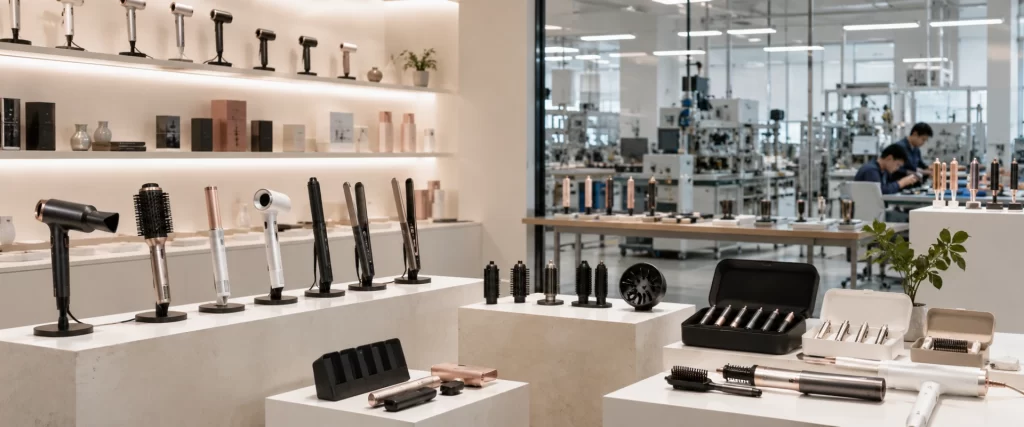
If a product performs well in the market, the next challenge is maintaining consistent specifications across repeat orders while potentially adding new colors, accessories, packaging versions, or related product categories.
This is especially important for distributors, retail programs, and growing private label brands.
When evaluating a supplier, consider whether the factory can maintain product specifications, communicate changes clearly, support replacement parts when required, and coordinate future product expansion.
A manufacturing partner that understands both the first launch and future range development can reduce unnecessary supplier changes as the business grows.
Frequently Asked Questions
What should I ask a hair styling appliance manufacturer before ordering?
Ask about product categories, available customization, sample procedures, quality control, target-market configurations, production capability, packaging support, and how repeat orders are managed.
Is OEM better than developing a completely new product?
Not always. OEM is often more efficient when an existing platform already matches your target market, while deeper ODM development makes more sense when product differentiation requires structural or functional changes.
Can hair styling appliances be customized for different countries?
Depending on the product platform, manufacturers may support different voltage, plug, cord, packaging, and selected configuration requirements. These details should be confirmed for the specific destination market before production.
Why is sample approval important?
The approved sample provides a practical reference for appearance, functions, branding, accessories, packaging, and other agreed specifications before volume production begins.
Can one manufacturer support several styling product categories?
Some factories manufacture multiple related categories. Working with a broader product platform can make future assortment planning easier for brands that intend to expand from one core product into a larger styling collection.
Find the Right Manufacturing Route for Your Project
Whether you are developing a hair dryer, straightener, curler, heated comb, or multi-function styling tool, start by defining your market, sales channel, target price position, product requirements, expected quantity, and desired level of customization.
KangRoad supports hair styling appliance projects from product selection and customization through sampling, manufacturing, and repeat supply.
Share on Social:


