




From early concepts to production-ready products, KangRoad provides integrated new product development support for hair styling appliance brands.
Start Your Private Label Project


From early concepts to production-ready products, KangRoad provides integrated new product development support for hair styling appliance brands.
Start Your Private Label Project
Engineering-Led Product Development
Turn Your Product Idea Into a Manufacturable Design
Developing a new hair styling appliance requires more than creating an attractive exterior. Product structure, materials, heating systems, motors, electronics, ergonomics, safety, tooling, and production feasibility all need to work together.
KangRoad brings these development requirements into one coordinated process. Whether you begin with a sketch, a reference product, or an early product concept, our engineering team helps transform your idea into a design that can move toward prototyping, tooling, testing, and commercial production.
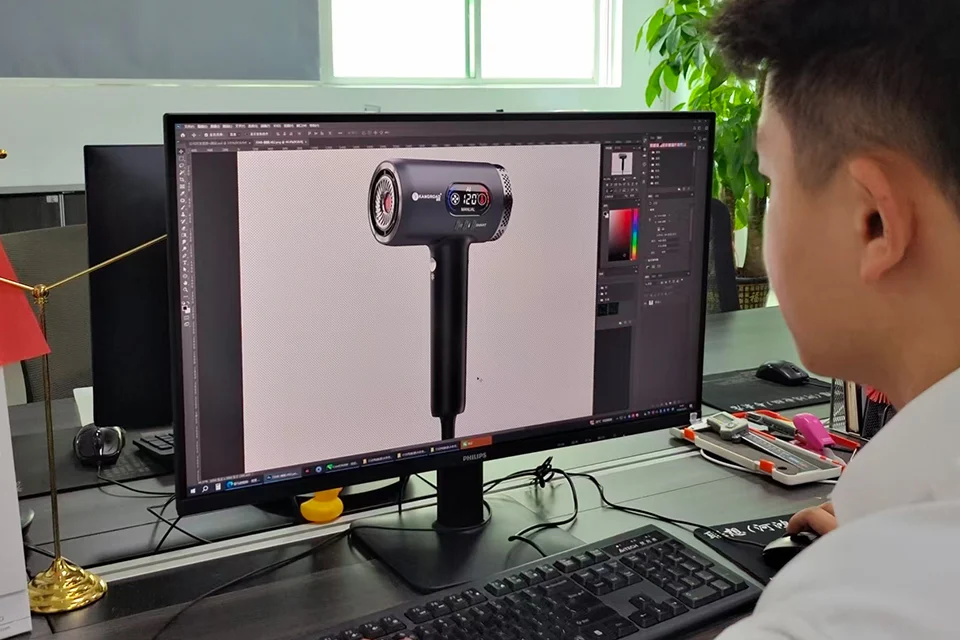
NPD Capabilities
Integrated New Product Development Capabilities
Design, engineering, tooling, prototyping, component selection, and production resources work together to support a smoother path from an early product concept to manufacturing.
In-House Mold Development
Mold trials, tooling adjustments, and approval can be coordinated directly with our engineering, injection, and manufacturing teams.
20+ Engineering Team
Our NPD engineering team supports projects across thermodynamics, motor control, product structure, and material science.
3D Design & Simulation
Product renderings, internal cross-sections, and applicable engineering simulations help evaluate the design before tooling begins.
Rapid Prototyping
For suitable projects, 3D-printed prototypes support early assessment of product dimensions, ergonomics, appearance, and handling.
Component Selection
Motors, heating elements, PCBs, sensors, and other components are evaluated according to product function and compatibility requirements.
Production Integration
Development can continue from prototypes and molds into injection molding, assembly, functional testing, branding, and mass production.
Development Process
From Concept to Mass Production
Our structured NPD process connects product design, engineering, tooling, validation, and manufacturing so that each development stage supports the next.
01
Concept & Industrial Design
Sketches, reference images, existing products, or early ideas are translated into a clearer product concept with defined appearance, dimensions, controls, and design direction.
02
Engineering & Material Selection
Our engineers develop the internal structure and evaluate suitable materials, motors, heating systems, electronics, and functional components.
03
Mold Development & T1 Samples
After engineering approval, mold development begins and T1 samples are produced for evaluation of structure, fit, appearance, and function.
04
Testing & Compliance
Performance, endurance, safety, and relevant market requirements are evaluated as the product moves toward production readiness.
05
Pilot Production
A controlled pilot run can help identify remaining production, assembly, or consistency issues before manufacturing is scaled.
06
Mass Production
After final approval, the product moves into stable manufacturing with agreed specifications, branding, packaging, and quality requirements.
Engineering Options
Engineering Choices for Different Product Concepts
Different product concepts require different combinations of materials, motors, heating systems, and structural solutions. These choices are evaluated as part of the complete appliance design.
Material Options
ABS PC PA66 Aluminum Ceramic Titanium
Motor Options
- DC Motor
- Universal Motor
- Digital Brushless Motor
Heating Technologies
- PTC Heating
- MICA Heating
- Advanced Ceramic Heating
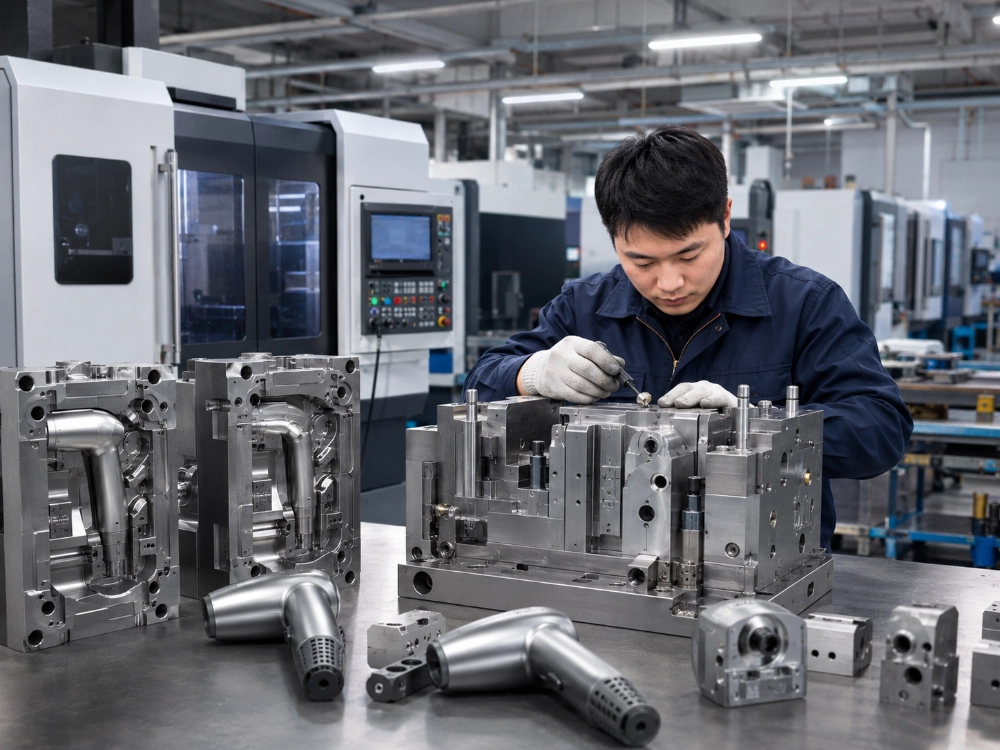
Tooling Capability
In-House Mold Development
Keeping tooling close to our engineering and manufacturing teams allows mold trials, adjustments, and production requirements to be handled within one coordinated development system.
In-HouseMold Workshop
T1Sample Validation
50–60 DaysTypical Mold Development*
*Actual development time varies according to product complexity, mold structure, revisions, and project requirements.
Sample Validation
Validate Before Moving Into Mass Production
T1 samples provide an important opportunity to evaluate how the engineered design performs as a real molded product before final production approval.
Fit
Review dimensional accuracy, component positioning, assembly relationships, and structural compatibility.
Function
Evaluate heating, airflow, controls, electronics, motors, sensors, and other required product functions.
Refine
Use sample testing and engineering feedback to refine important details before the final production stage.
Testing & Compliance
Testing Built Into Product Development
Testing is considered during development rather than only after the product is complete. Performance, durability, safety, and relevant market requirements can be reviewed before the project moves into full production.
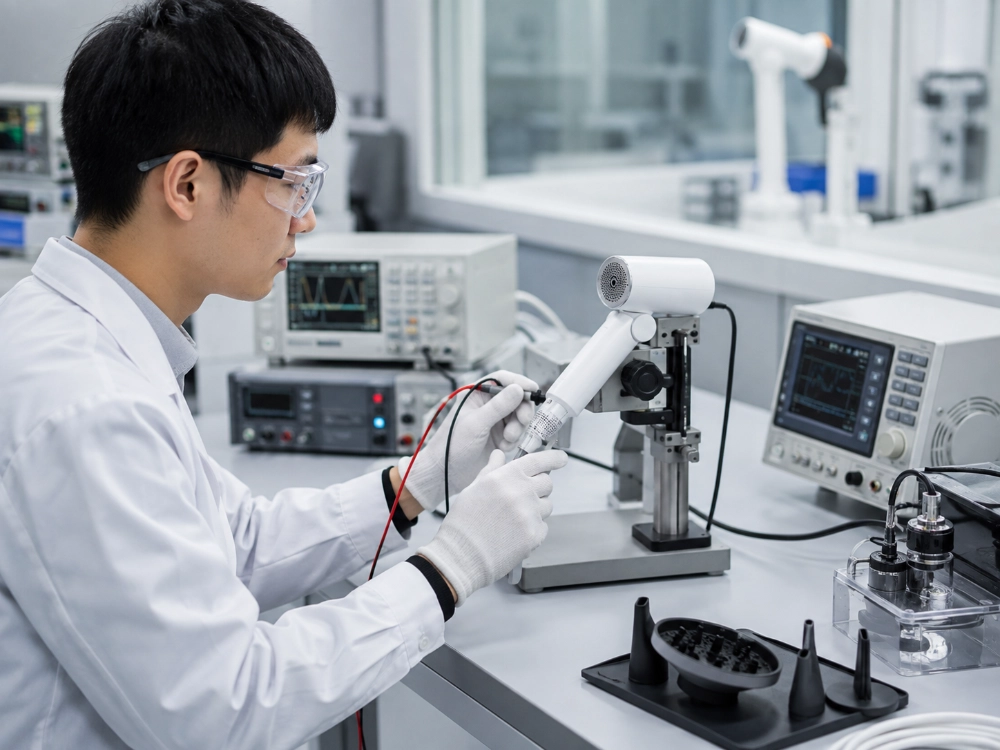
- Performance Testing
- Endurance Testing
- Safety Testing
- Functional Validation
Compliance Considerations
CE RoHS FCC GS GCC UKCA
Pilot Production
Reduce Production Risk Before Scaling
Before moving directly into high-volume manufacturing, selected NPD projects can enter a controlled pilot production stage. This allows the product and production process to be reviewed under more realistic manufacturing conditions.
Pilot production can help identify remaining assembly, process, consistency, or manufacturing details before the project is approved for larger-scale production.
Typical Pilot Run
100–500 Units
A controlled production quantity helps bridge the gap between development samples and repeatable mass manufacturing.
Review → Improve → Approve → Scale
Why KangRoad
Connect Product Engineering With Real Manufacturing
Engineering + Manufacturing
Development decisions can be evaluated together with actual tooling, assembly, and production requirements.
In-House Tooling
Mold development can be coordinated directly with the product development process instead of being separated from manufacturing.
Clear Project Communication
Development updates can be supported by samples, photos, videos, and testing information throughout the project.
One-Stop Development
Concept, engineering, tooling, validation, production, branding, and packaging can progress within one coordinated system.
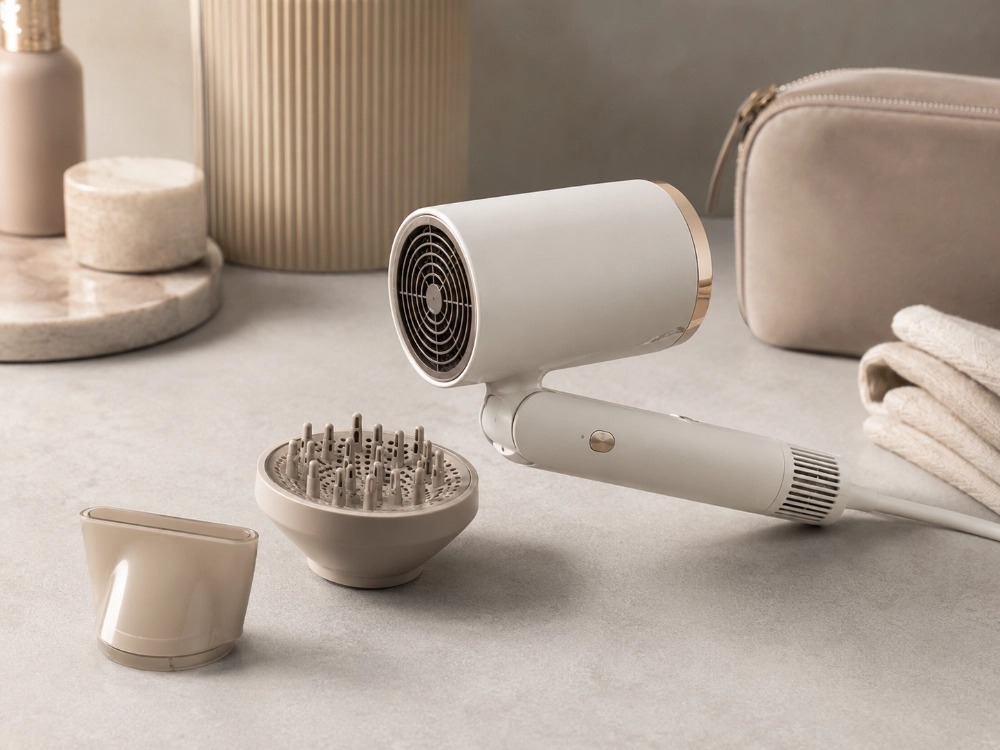
NPD Project Example
Compact Foldable Hair Dryer Development
Project Requirement
The project focused on developing a compact hair dryer for international use with a foldable structure, removable filter, dual-voltage configuration, and lightweight design.
Development Work
- New foldable hinge mechanism
- New mold development
- Removable filter structure
- Dual-voltage PCB development
- Lightweight structural optimization
The project progressed from product concept through engineering and mold development toward a production-ready design.
FAQ
New Product Development FAQs
What information do I need to start a new product development project?
You can begin with a sketch, reference images, an existing product example, functional requirements, or an early-stage concept. These materials can be used as the starting point for design and technical evaluation.
Can KangRoad develop a product from only a rough concept?
Yes. An early idea can be developed into 2D drawings and 3D renderings before the project moves into detailed engineering, tooling, and prototype validation.
Can you make prototypes before developing the final mold?
For suitable projects, 3D-printed prototypes can be used to review ergonomics, dimensions, appearance, and general product handling before production tooling begins.
Can you help select materials, motors, and heating technologies?
Yes. Material, motor, heating-system, PCB, sensor, and other component choices can be evaluated according to the product structure, required performance, and intended application.
How long does new mold development usually take?
For suitable projects, mold development may take approximately 50–60 days. Actual timing depends on product complexity, mold structure, revisions, testing, and approval requirements.
Can you support pilot production before mass production?
Yes. Depending on the project, a pilot run of approximately 100–500 units can be used to evaluate production consistency and resolve remaining manufacturing issues before scaling.
Have a New Hair Styling Product Idea?
Share your product sketch, reference product, functional requirements, or early concept with our engineering team. We can help evaluate the project and define the next development steps.


