



How to Build a Private Label Hair Styling Product Line
By hqt
Aug 24, 2026


Launching private label hair styling products requires more than finding an appliance and placing your logo on it.
A strong product line should connect the needs of your target customer with product functions, appearance, price positioning, packaging, accessories, sales channels, and future range expansion.
Planning these elements together helps create a collection that feels like one brand rather than several unrelated products sourced from different places.
Define the Market Before Choosing the Product
Product selection should begin with the customer, not the supplier catalog.
Consider who will use the product, where it will be sold, the expected retail position, the main styling need, and what customers in that market are likely to compare.
A salon-focused dryer may require a different combination of performance, handling, attachments, and appearance from a compact model intended for travel or general online retail.
Straighteners may also vary by plate configuration, temperature functions, styling purpose, appearance, and target price segment.
Defining these factors first helps narrow the product range more efficiently.
Start With a Clear Core Product
A new private label collection does not need to launch every possible styling category at once.
Many brands benefit from beginning with a clear hero product and adding related categories over time.
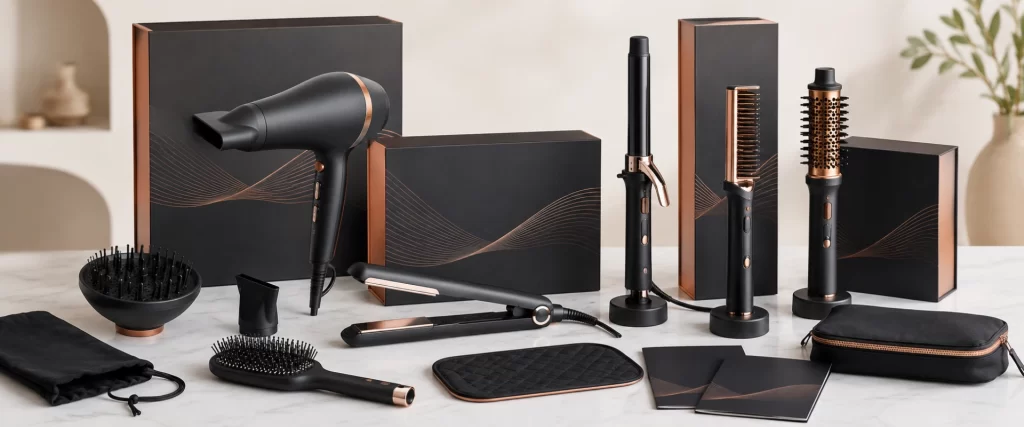
A brand focused on drying and styling might begin with the Hair Dryers Series before adding a straightener or hot air styler.
Another brand may build its identity around smoothing and heat styling, beginning with straighteners and later adding curling tools or heated combs.
KangRoad currently supports hair dryers, straighteners, curlers, heated combs, hot air stylers, and styling accessories, allowing private label collections to expand across related categories.
Create a Consistent Product Identity
Consistency is one of the most important differences between simply reselling products and building a recognizable private label collection.
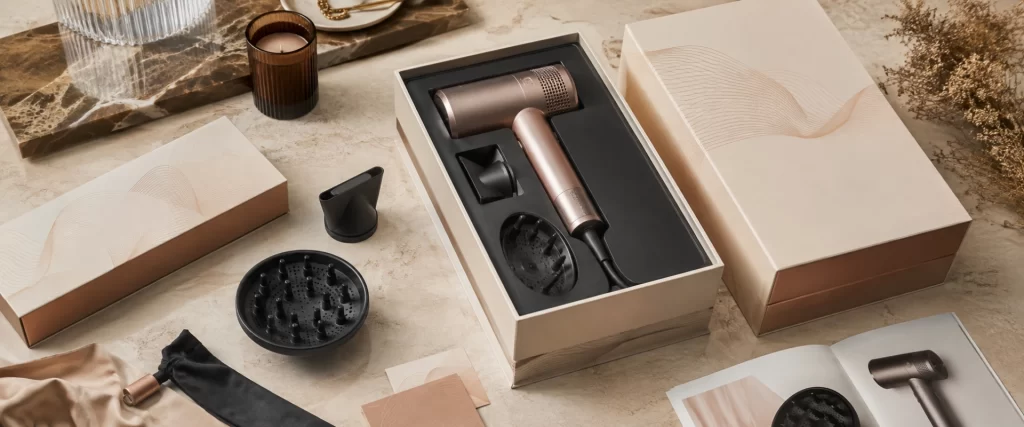
Color direction, surface finish, logo placement, product graphics, packaging, manuals, accessories, and even the way items are arranged inside the box can influence the overall presentation.
These choices should reflect the intended market position.
A value-oriented everyday product may require simple, efficient packaging, while a premium styling line may place greater emphasis on finishes, coordinated accessories, and presentation.
KangRoad’s private label service supports coordinated customization across product appearance, logo application, electrical configuration, accessories, and packaging.
Match Product Configuration to the Destination Market
A styling appliance developed for one country should not automatically be assumed suitable for another.
Voltage, plug type, cord configuration, labeling, packaging information, and applicable product requirements may vary by market.
These decisions should be confirmed early because they can affect product selection and sample preparation.
For brands selling in several regions, it can also be useful to plan which specifications remain common across all versions and which details need to change by market.
This makes future range management more organized.
Treat Packaging as Part of the Product
Packaging has both practical and brand functions.
It protects the appliance and accessories, but it also presents the product to distributors, retailers, e-commerce customers, or gift recipients.
A complete packaging plan may include the outer retail box, inner tray, product protection, manual, labels, inserts, accessories, and shipping requirements.
Planning these elements during product development helps avoid a situation where the appliance is approved first and packaging is treated as an unrelated last-minute task.
The Private Label Beauty Brands page shows how KangRoad coordinates product and packaging development within the same project.
Use Samples to Confirm the Complete Product
Sample approval should cover more than whether the appliance switches on.
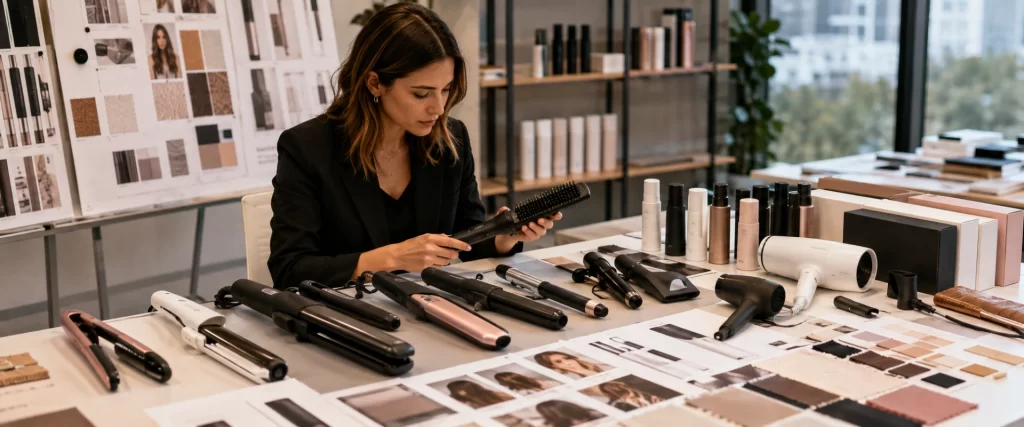
The buyer should evaluate appearance, color, surface finish, logo placement, handling, product functions, accessories, electrical configuration, packaging, labels, and other agreed details.
For more customized products, several development or revision stages may be needed before the product is ready for volume production.
Keeping approved specifications clear makes it easier for both sides to identify what the final production order needs to match.
Plan the Second Order While Developing the First
Private label growth often comes from repeatability.
Once a core product is established, the same platform may later support another color, accessory combination, packaging version, regional configuration, or related styling category.
KangRoad’s current private label strategy specifically allows brands to begin with one or two products and expand with additional configurations and categories over time.
This approach can help maintain a more consistent product direction as the collection grows.
Buyers interested in how products move from development into production can also review KangRoad’s Hair Styling Appliance Manufacturing capabilities.
Frequently Asked Questions
What products can be developed for a private label hair styling brand?
Typical categories include hair dryers, straighteners, curling tools, heated combs, hot air stylers, and related styling accessories.
Do I need a completely new product design?
No. Many private label projects begin with an existing platform and customize branding, appearance, packaging, electrical configuration, and selected options. Deeper ODM development is available when greater differentiation is required.
Should I launch several products at the same time?
Not necessarily. A focused launch with one strong core product can make product positioning and market testing easier before the collection expands.
What should be confirmed before approving a sample?
Confirm appearance, branding, product functions, configuration, accessories, packaging, labeling, and any project-specific requirements that will be used as the production reference.
How can I keep several private label products visually consistent?
Create common rules for color direction, surface finish, logo placement, packaging graphics, accessories, and overall positioning before developing each individual product.
Build the Collection Around a Long-Term Brand Plan
The strongest private label product lines are developed with both the first launch and future expansion in mind.
Start with the customer and market, select a suitable product platform, coordinate the brand presentation, confirm specifications through samples, and establish a production reference that can support repeat orders.
That creates a more practical foundation for expanding from one successful styling appliance into a broader branded collection.
Share on Social:


-
PREV:
OEM vs ODM Hair Styling Appliances: Which Is Right for Your Brand?
- NEXT: Null


